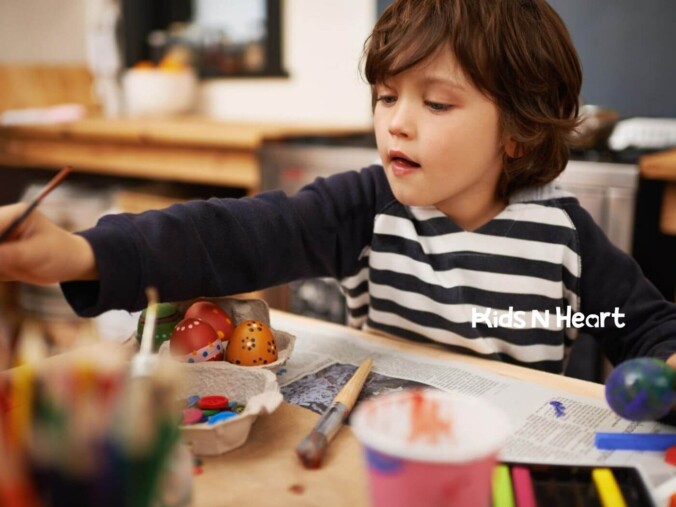
Creativity is an important part of childhood. Whether it shows up through drawing, storytelling, building, or imaginative play, creativity allows children to explore ideas and express themselves. For families navigating an autism diagnosis, it’s common to wonder how therapy will affect that creativity.
Through our autism services in North Carolina, we regularly see how the right support helps children discover new ways to play, communicate, and experiment with ideas. ABA therapy focuses on building foundational skills like communication, flexible thinking, and play development—skills that often help creativity grow naturally over time.
Why Creativity Can Be Challenging for Some Autistic Children
Creativity often depends on flexible thinking, social interaction, and symbolic play. For some autistic children, these areas may require additional support.
That does not mean autistic children lack creativity. In fact, many demonstrate incredible originality in the way they approach interests, patterns, storytelling, or art. However, certain developmental differences can make it harder to express creativity in typical ways.
Some common challenges include:
- Difficulty with imaginative or pretend play
- Rigid thinking patterns
- Communication barriers that make sharing ideas difficult
- Uncertainty about social interaction during collaborative play
We sometimes see children who enjoy activities like building or drawing but feel unsure about open-ended play scenarios. One child we worked with loved lining up toy animals but rarely created stories with them. Through guided play activities in in-home ABA therapy, we gradually introduced small changes—adding a “zookeeper” character, then a pretend adventure. Over time, the child began inventing their own animal stories.
Moments like this remind us that creativity often grows when children feel supported and confident exploring new ideas.
How ABA Therapy Builds Skills That Support Creativity
ABA therapy focuses on helping children develop practical skills that improve daily life. Many of those same skills also support creativity.
When children gain new tools for communication, problem-solving, and play, they often begin expressing ideas in new ways.
Communication Skills Encourage Creative Expression
Creativity often involves sharing thoughts, stories, and ideas. For children who experience communication challenges, expressing those ideas can be difficult.
In therapy sessions at Kids N Heart, we work on expanding communication through speech, visual supports, or alternative communication systems when needed. As children gain more ways to express themselves, their imaginative thinking becomes easier to share.
We remember working with a child who loved drawing but rarely talked about his pictures. As his communication skills developed, he began explaining detailed stories behind each drawing—characters, settings, and adventures that had previously remained internal.
Communication gave his creativity a voice.
Flexible Thinking Opens the Door to Imagination
Creativity thrives on flexibility—the ability to see new possibilities and adapt ideas.
Some autistic children naturally prefer predictable routines or familiar patterns. While routines are valuable, learning flexible thinking can help children feel more comfortable trying new approaches.
During ABA sessions, we often introduce flexibility through small changes in activities. For example:
- Playing a familiar game with new rules
- Using toys in different ways
- Encouraging alternative problem-solving strategies
These exercises help children learn that change can be safe and even enjoyable. Over time, flexible thinking supports more imaginative exploration.
Play Skills Encourage Imaginative Thinking
Play is one of the most natural forms of creativity in childhood.
However, some autistic children may prefer structured activities or independent play rather than imaginative play with others. ABA therapy often includes teaching different types of play skills, including:
- Pretend play
- Cooperative play
- Story-based play scenarios
We might start with simple pretend actions—like feeding a toy animal or driving a toy car. As children become comfortable with these actions, we gradually expand the play into more complex stories.
One child in our program began by pushing toy trains along a track repeatedly. Over time, we added characters, destinations, and small storylines. Eventually, the child began narrating entire train adventures independently.
What started as a repetitive activity became a creative storytelling experience.
The Role of Confidence in Creative Development
Creativity often grows when children feel safe exploring ideas without fear of mistakes.
Many autistic children experience frustration when tasks feel confusing or when communication breaks down. ABA therapy focuses on creating structured, supportive environments where children can practice new skills successfully.
Positive reinforcement helps children feel encouraged when trying new activities. As confidence grows, children become more willing to experiment with new ideas, games, or forms of expression.
We often notice that once a child begins experiencing success during therapy sessions, they start initiating more creative activities at home or school.
Parents sometimes tell us their child suddenly began inventing games, drawing stories, or creating imaginative scenarios with toys that had previously gone unused.
Creative Strengths in Autistic Children
It is important to recognize that creativity in autistic children does not always look the same as it does for neurotypical peers.
Many autistic individuals demonstrate creativity through:
- Unique visual thinking
- Detailed artistic interests
- Innovative problem-solving
- Deep exploration of specific topics
In therapy, we often try to incorporate these strengths into learning activities.
For example, if a child has a strong interest in space, we might build communication activities around creating space missions, drawing planets, or imagining astronaut adventures. This approach allows creativity and skill development to grow together.
By embracing children’s interests, we help transform passions into powerful learning opportunities.
Encouraging Creativity at Home
Families play an important role in nurturing creativity alongside therapy.
A few simple strategies can support creative expression at home:
- Provide open-ended toys like blocks, art supplies, or figurines
- Follow your child’s interests when introducing new activities
- Encourage storytelling during playtime
- Allow time for independent exploration and imagination
Creativity does not need to look perfect or structured. Sometimes the most meaningful creative moments happen during spontaneous play or quiet exploration.
Supporting Creativity Through ABA Therapy
Understanding how ABA therapy can support creativity in autistic children helps reframe the way many people think about therapy. Structure and creativity are not opposites. In many cases, structure creates the foundation that allows creativity to flourish.
At Kids N Heart ABA, we focus on helping children develop communication, flexible thinking, and play skills that support both learning and self-expression. Through individualized therapy plans, children gain the confidence and tools they need to explore ideas, share stories, and engage with the world around them.
Families in North Carolina can learn more about our autism services through Kids N Heart ABA. We offer in-home ABA therapy, school-based ABA therapy, and telehealth ABA services to support children in environments where they feel most comfortable.
If you’re interested in learning how ABA therapy can support your child’s development—including their creativity—our team is here to help. Reach out today to connect with our specialists and explore the next steps for your family.
FAQs
1. Can autistic children be creative?
Yes. Many autistic children show strong creativity through art, storytelling, problem-solving, or deep interests in specific topics. Creativity may simply appear in unique ways compared to neurotypical peers.
2. Does ABA therapy limit creativity?
Modern ABA therapy does not limit creativity. Instead, it helps children build skills such as communication, flexible thinking, and play development—skills that often support imaginative thinking.
3. How does ABA therapy encourage creativity?
ABA therapy encourages creativity by teaching foundational skills like communication, flexible thinking, and pretend play. As children gain confidence and understanding, they often begin exploring new ideas more freely.
4. Why is play important for creativity in autistic children?
Play allows children to experiment with ideas, explore different roles, and practice social interaction. Developing play skills can help autistic children express creativity and engage more comfortably with others.
5. How can parents encourage creativity at home?
Parents can support creativity by providing open-ended toys, encouraging storytelling, following their child’s interests, and allowing time for imaginative play without strict expectations.
Sources:
- https://www.psychologytoday.com/us/blog/mom-am-i-disabled/201612/autism-and-creativity
- https://psycnet.apa.org/fulltext/2025-66159-001.html
- https://www.sciencedirect.com/science/article/pii/S2713374525000135
- https://www.monarchschool.org/blog/the-role-of-art-and-creativity-in-autism-education
- https://www.autismspeaks.org/applied-behavior-analysis
- Tags:
- ABA therapy
- autism